
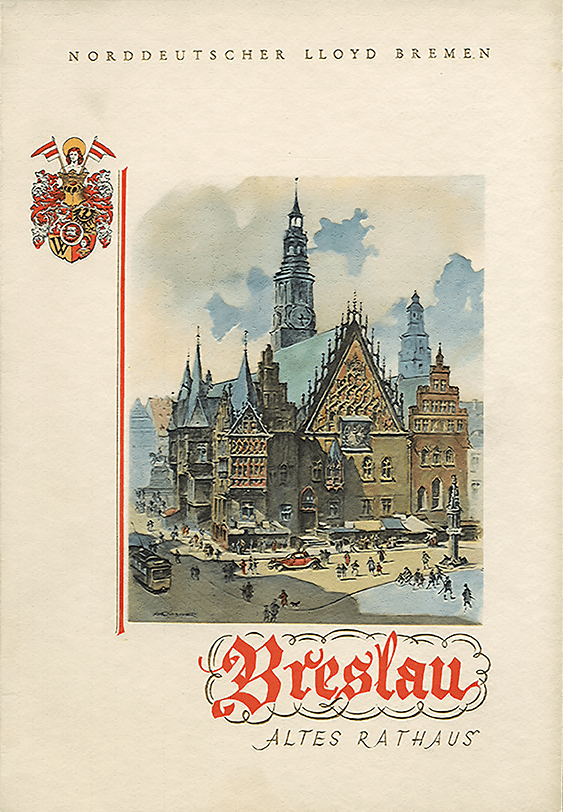
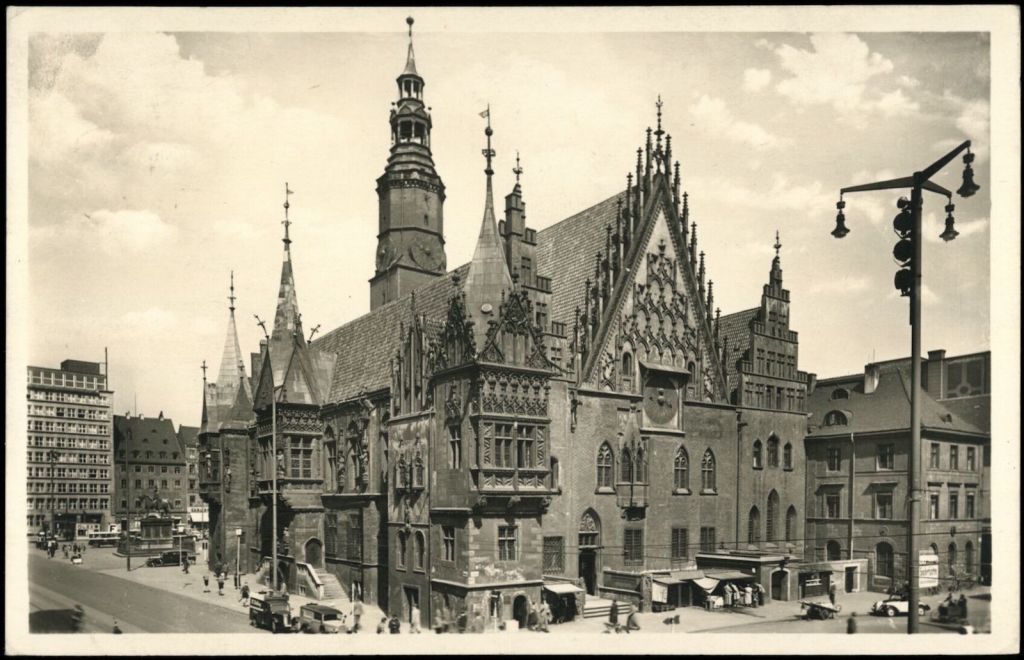
This is an artist’s rendering of Breslau’s Old City Hall, from an early 20th century series of prints used by the Norddeutscher Lloyd (North German Lloyd) ship company, operating out of Bremen, Germany. The city of Breslau in Silesia has a long German history, but it is no longer part of Germany. It’s the same fate that befell East Prussia. The United States, Britain and Russia decreed in 1945 that the eastern parts of Germany… despite being German for 700 years… should become Russian, Polish and Lithuanian.
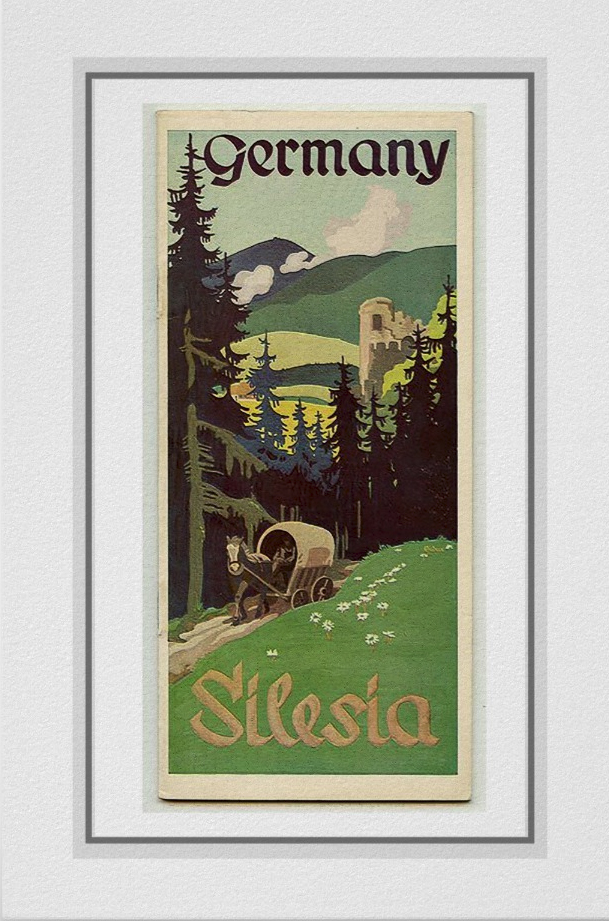
After the 1245 A.D. Mongol invasion the town of Breslau was partly populated by German settlers who would gradually become its dominant ethnic group. The city council used Latin and German, and “Breslau”, the Germanized name of the city, appeared for the first time in written records. In 1335, Breslau, together with almost all of Silesia, was incorporated into the Kingdom of Bohemia, then a part of the German Holy Roman Empire, and from 1526 to 1742, Silesia was ruled by the Austrian House of Habsburg. After 1742, Silesia was ruled by Frederick the Great of the Prussian House of Hohenzollern.
In the Napoleonic Era, Breslau became the center of the German Liberation movement against Napoleon… the gathering place for volunteers from all over Germany in early March 1813 and the Prussian mobilization site for the campaign which ended at the victorious Battle of Leipzig.
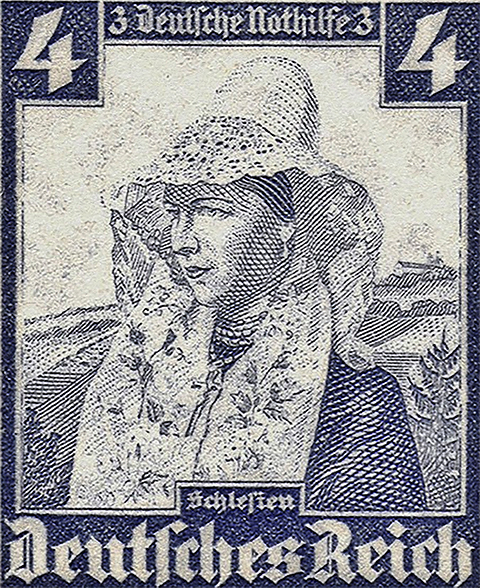
The Unification of Germany in 1871 turned Breslau into the sixth-largest city in the German Empire.
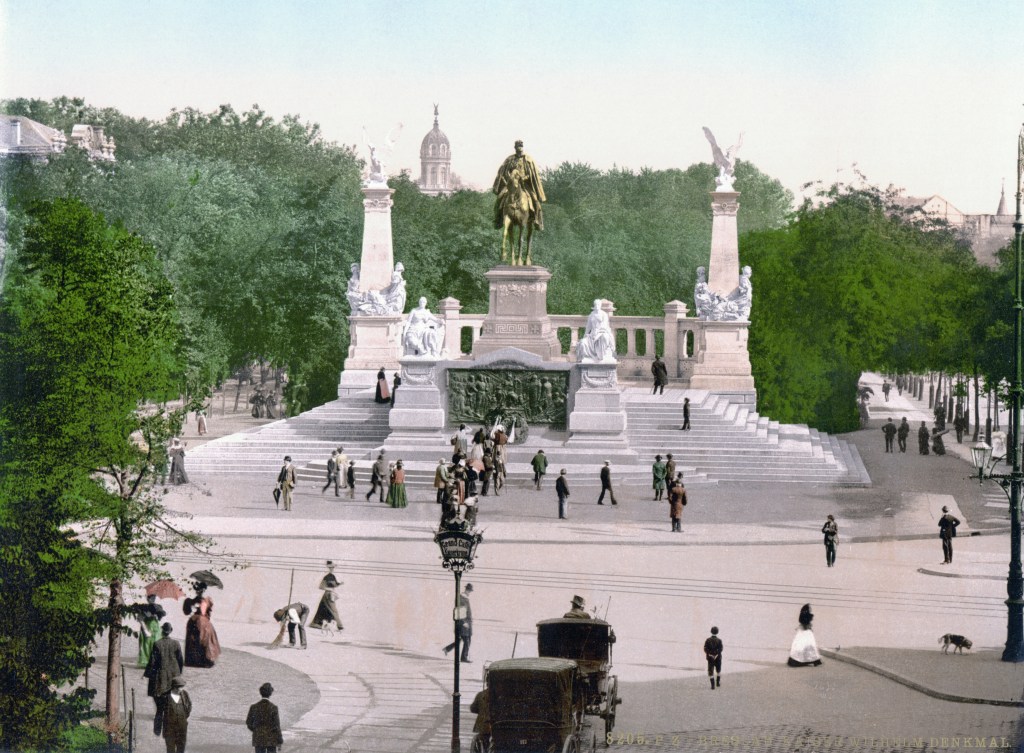
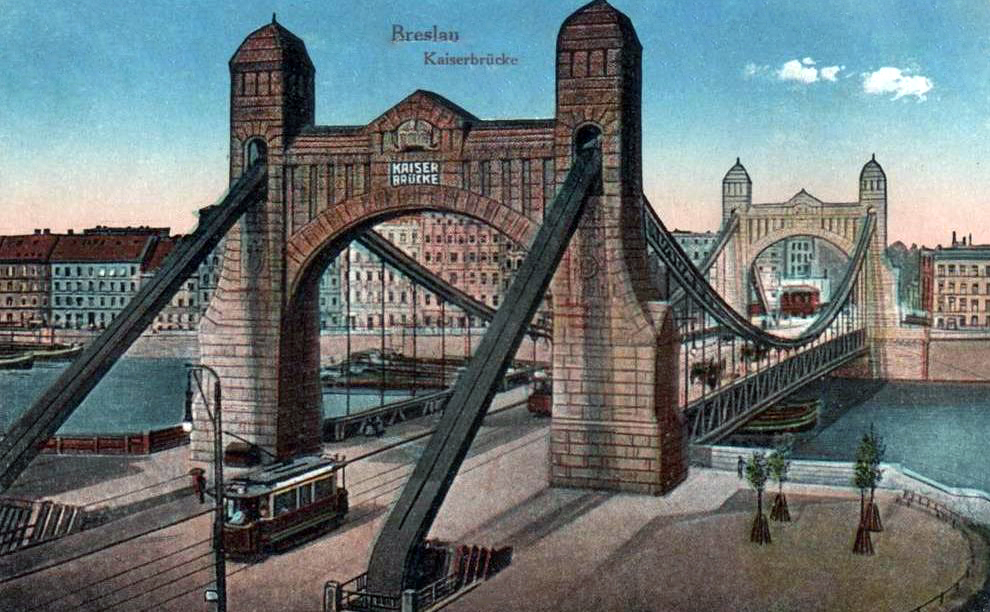

In August of 1945 the German population that was still alive after intensive fighting to hold the city faced a terrible future… they became forced labor in Russian camps or killed, or were forcibly expelled to the Soviet zone of occupied Germany. The province of Silesia was removed from Germany and repopulated with Poles who lost their homes due to Russia’s seizure of eastern Poland.
Breslau was renamed Wroclaw and is one of the largest cities in Poland. With its 12 islands and 120 bridges, the city on the river Oder is often dubbed the “Venice of Poland.”

Explore images on brand new products at my stores

 For People Proud of their German Heritage
My great grandfather and his brother were born in Breslau in the 1840s.
LikeLike
MY GRANDFATHER WAS BORN IN BRESLAU. HOW WOULD I GO ABOUT FINDING BIRTH CERTIFICATE. I WOULD LIKE TO OBTAIN DUAL CITIZENSHIP.
LikeLike
My great grandmother was born in Breslau in 1921. Has any one had luck retrieving archived documents (birth, marriage, certificates, etc)?
LikeLike
Yes, my family has acquired several of those kinds of documents. My father and grandfather were born in Breslau, To get those documents, you have to go through the German government in Berlin, not the Polish government. If you ever get the chance, you should visit Breslau (known to day as Wroclaw). I was there recently and it’s a charming, fun and inexpensive town.
LikeLike
https://en.wikipedia.org/wiki/Timeline_of_Wroc%C5%82aw where did you get the “German for 700 years” part?
LikeLike
After the 1245 A.D. Mongol invasion the town of Breslau was partly populated by German settlers who would gradually become its dominant ethnic group. The city council used Latin and German, and “Breslau”, the Germanized name of the city, appeared for the first time in written records. In 1335, Breslau, together with almost all of Silesia, was incorporated into the Kingdom of Bohemia, then a part of the German Holy Roman Empire, and from 1526 to 1742, Silesia was ruled by the Austrian House of Habsburg. After 1742, Silesia was ruled by Frederick the Great of the Prussian House of Hohenzollern.
LikeLike
My great grandmother and great grandfather as well as my grandfather were all born in Breslau in 1869, 1872 and 1896 respectfully. They emigrated from Breslau to New York in 1903. I, myself lived in Germany for almost 30 years. My wife is German. I also speak German but would give anything to once again speak to my great grandmother about her history. I was only a boy when I last spoke with her. Her English was not very good and I spoke no German at that time. I was only 8 or 9 years old.
LikeLike