It was the battle at Yorktown in 1781 that was Washington’s last roll of the dice to determine America’s future. Victory at Yorktown would be the battle that could finally assure America’s independence or doom the revolution to failure. But without French support, Washington openly stated that the war would have been lost. Not so… Continue reading There is a German-American link to US independence…The crucial victory at Yorktown
Author: edsimoneit
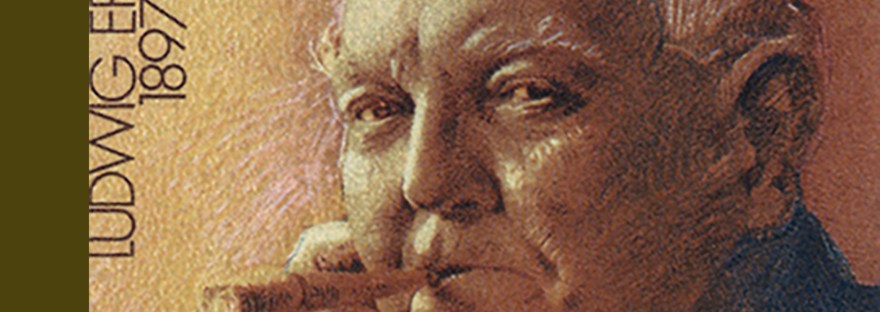
Ludwig Erhard crafted West Germany’s post-World War II economic recovery, the German “economic miracle.”
Erhard shepherded the new West German economy through a recovery that outpaced the growth of all the European countries that had won the war. Some credit for European recovery is due to the Marshall Plan, which provided assistance of $12 billion (equivalent to $120 billion today) but it was spread among 18 countries...for example, Britain… Continue reading Ludwig Erhard crafted West Germany’s post-World War II economic recovery, the German “economic miracle.”
The West’s premier work on the philosophy of war was written in Germany by Clausewitz in his spare time as a Prussian officer.
“On War” is the West's premier work on the philosophy of war. It was written by Carl von Clausewitz in his spare time as a Prussian officer. Although it was not even published until after his death, his ideas took hold and have been widely influential in military theory and have had a strong influence… Continue reading The West’s premier work on the philosophy of war was written in Germany by Clausewitz in his spare time as a Prussian officer.
Lübeck has experienced 878 years of fascinating history since its founding in 1143
Lübeck is a World Heritage Site, mainly because of its extensive medieval Brick architecture and its restored city center. But you should also know that this medieval city has experienced 878 years of fascinating history since its founding in 1143 as a German settlement on the river island Bucu. The old town center is famous… Continue reading Lübeck has experienced 878 years of fascinating history since its founding in 1143
They trekked through innumerable northern German towns and cities wearing their unfamiliar Austrian style clothing
Imagine a long stream of people walking day after day from Saltzburg to Berlin, creating a sensation as they trekked through innumerable northern German towns and cities wearing their unfamiliar Austrian style clothing. In 1982 a German postage stamp celebrated this event on the 250th anniversary of the arrival of Salzburg Emigrants in Prussia in… Continue reading They trekked through innumerable northern German towns and cities wearing their unfamiliar Austrian style clothing
Cranach’s Portrait of a Beardless Man in 1500 was widely used on German currency in 1960s
Lucas Cranach the Elder ...1472 to 1553... was a German Renaissance painter and printmaker in woodcut and engraving. He and his son were court painters to the Electors of Saxony and are known for portraits, both of German princes, princesses and those of the leaders of the Protestant Reformation. Cranach the Elder embraced the Protestant… Continue reading Cranach’s Portrait of a Beardless Man in 1500 was widely used on German currency in 1960s
Triumphs of Maximilian, 1519…one of the largest prints ever produced
This image is an excerpt from a magnificent piece of art that is 177 feet long…commissioned in 1512 and still unfinished by 1519, when its benefactor died. The project was entitled: Triumphs of Maximilian, also referred to as the Triumphal Procession of Maximilian I. The composite image was printed from over 130 separate wood blocks… Continue reading Triumphs of Maximilian, 1519…one of the largest prints ever produced
At Kunersdorf near Berlin, Frederick the Great came close to losing his life
Frederick the Great was a commander who repeatedly, even joyfully, risked everything on a single day's battle - his army, his kingdom, often his very life. At a battle near Berlin in 1759, he probably came closest to losing his life. The image shown here depicts that moment…it is an excerpt from a tapestry by… Continue reading At Kunersdorf near Berlin, Frederick the Great came close to losing his life
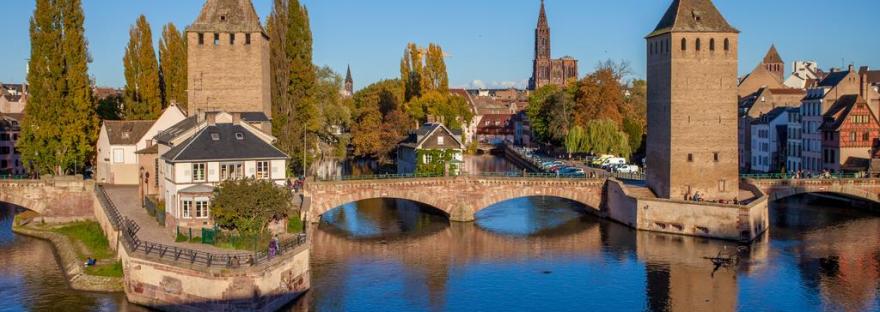
The German area of Alsace Lorraine was once again given to France in 1945
Alsace-Lorraine was territory west of the Rhine River that was part of the Holy Roman Empire of the German Nation.. For over 700 years It was known as Elsass-Lothringen... from the 10th to the 17th century... populated with people who for the most part spoke Alemannic German dialects. However, France long desired their eastern border… Continue reading The German area of Alsace Lorraine was once again given to France in 1945
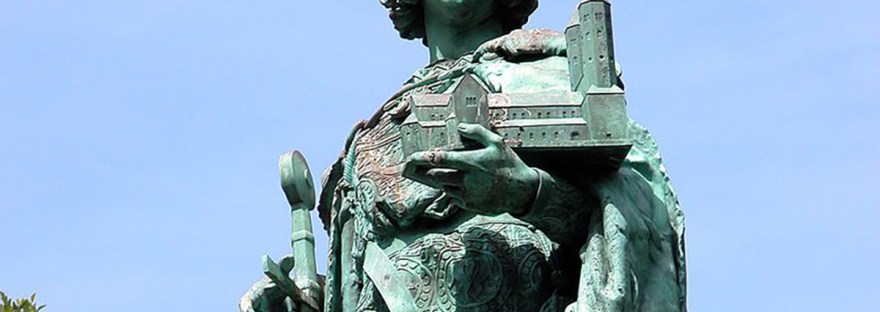
He founded Munich, Lübeck and Augsburg… but he lost it all when he angered Kaiser Friedrich I
Heinrich der Löwe (Henry the Lion) Heinrich der Löwe (Henry the Lion) was one of the most powerful German princes of his time. He founded many cities, among them Munich, Lübeck and Augsburg*… but he lost it all when he angered Kaiser Friedrich I, Barbarossa (Frederick Barbarossa). The image below depicts the moment that Henry… Continue reading He founded Munich, Lübeck and Augsburg… but he lost it all when he angered Kaiser Friedrich I