Notes on German Culture, Prussia...Northern Germany, Second Reich...1871 to 1918

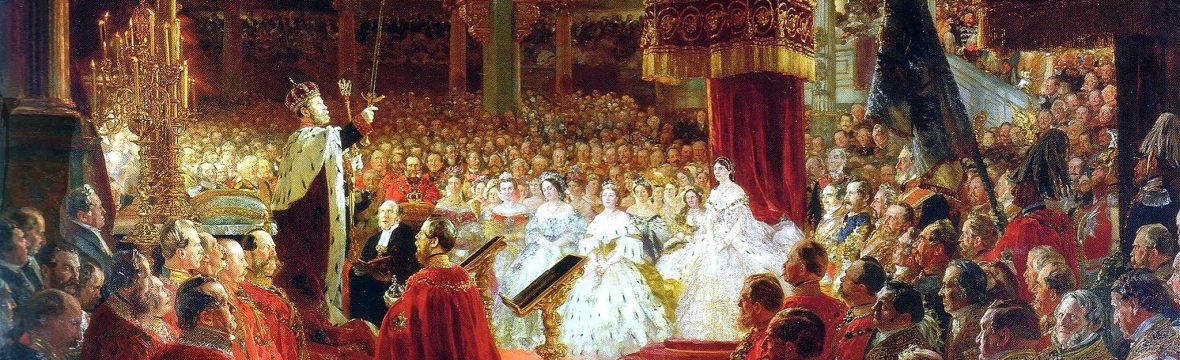
A cavalry of trumpeters led the royal carriage thru Berlin where a 72 gun salute started the dual wedding ceremony

In February 1906, the Silver Wedding Anniversary of the German Emperor and Empress was turned into a double wedding celebration when they gave their second son, Prince Eitel, permission to be married on the same day. Kaiser Wilhelm and family in 1906, by Ferdinand Keller Their son’s bride, the Duchess Sophie-Charlotte, was the daughter of… Continue reading A cavalry of trumpeters led the royal carriage thru Berlin where a 72 gun salute started the dual wedding ceremony

History Highlights, Old Germany...lost territory, Prussia...Northern Germany, Teutonic Knights..Deutscher Orden

There were successful Crusades conducted in northern Europe for hundreds of years

Prussia circa 1250, Teutonic Knights Charge during winter, their favorite season in the Northern Crusades. Much of German history is not well known ...for example, there were successful Crusades conducted in northern Europe for hundreds of years and the largest castle ever built in Europe was a German crusader castle, the Marienburg. There once existed… Continue reading There were successful Crusades conducted in northern Europe for hundreds of years

Famous Artists, History Highlights, Prussia...Northern Germany, Second Reich...1871 to 1918

Departure of King Wilhelm I. of Prussia to join the Army on July 13, 1870

An excerpt from "Departure of King Wilhelm I. of Prussia to join the Army on July 13, 1870" at the outbreak of the Franco-Prussian War, by Adolph von Menzel. The King would return to Berlin 11 months later, in June 1871, not only victorious but also as the new Kaiser of the German Empire, already… Continue reading Departure of King Wilhelm I. of Prussia to join the Army on July 13, 1870

Notes on German Culture, Prussia...Northern Germany

Whereas the US has Uncle Sam and England has John Bull, Germany has Michael, known as Der Deutsche Michel

Whereas the US has Uncle Sam and England has John Bull, Germany has Michael, known as Der Deutsche Michel (The German Michael). “Der Deutsche Michel” ...statue on roof of the Academy of Art in Königsberg, East Prussia His popularity peaked in the 1840s, so perhaps this is why most people never heard of Michel. Even… Continue reading Whereas the US has Uncle Sam and England has John Bull, Germany has Michael, known as Der Deutsche Michel

History Highlights, prussia

Although at war with Austria, Russia, France, and Sweden, Frederick did not ever expect to lose a battle.

It was in the frenzied fighting in 1757 at the Battle of Kolin that Frederick the Great is said to have bawled at Manstein’s flinching Prussian infantry “Dogs! Do you want to live forever?” The surrounded Prussians in a rearguard battle are depicted in this painting by Richard Knötel. Prussia lost this battle, but losing… Continue reading Although at war with Austria, Russia, France, and Sweden, Frederick did not ever expect to lose a battle.

Famous Artists, History Highlights, Prussia...Northern Germany, Second Reich...1871 to 1918

When the French declared war on Prussia in 1870, they were overconfident.

This painting by Anton von Werner shows German Crown Prince Friedrich Wilhelm contemplating the corpse of French General Abel Douay, on the first day of the Franco-Prussian War in August 1870. When the French declared war on Prussia in 1870, they were overconfident. They assumed an easy victory and seriously underestimated the strength and experience… Continue reading When the French declared war on Prussia in 1870, they were overconfident.

Famous Artists, History Highlights, Prussia...Northern Germany

Twenty year old Frederick William Hohenzollern became a Prince of the Holy Roman Empire in 1640

Twenty year old Frederick William Hohenzollern became Elector of Brandenburg and Duke of Prussia in 1640 and reigned for 48 years until his death in 1688. Historians refer to him as "the Great Elector" (der Große Kurfürst) because of his military and political prowess which set the groundwork for Brandenburg and Prussia to merge and… Continue reading Twenty year old Frederick William Hohenzollern became a Prince of the Holy Roman Empire in 1640