This image is an excerpt from a magnificent piece of art that is 177 feet long…commissioned in 1512 and still unfinished by 1519, when its benefactor died. The project was entitled: Triumphs of Maximilian, also referred to as the Triumphal Procession of Maximilian I. The composite image was printed from over 130 separate wood blocks… Continue reading Triumphs of Maximilian, 1519…one of the largest prints ever produced
Category: History Highlights
Brief analysis of interesting events in German history
At Kunersdorf near Berlin, Frederick the Great came close to losing his life
Frederick the Great was a commander who repeatedly, even joyfully, risked everything on a single day's battle - his army, his kingdom, often his very life. At a battle near Berlin in 1759, he probably came closest to losing his life. The image shown here depicts that moment…it is an excerpt from a tapestry by… Continue reading At Kunersdorf near Berlin, Frederick the Great came close to losing his life
The German area of Alsace Lorraine was once again given to France in 1945
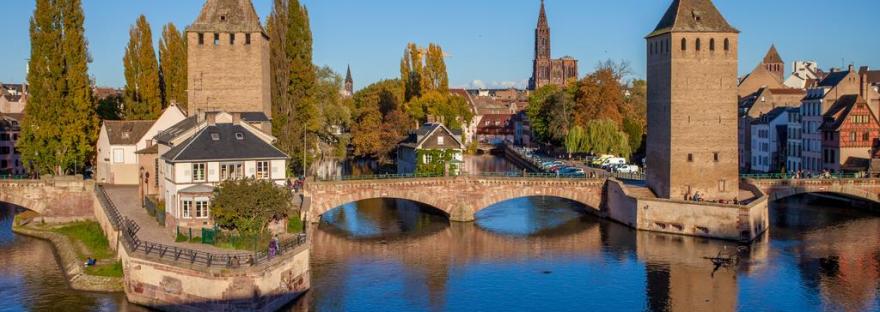
Alsace-Lorraine was territory west of the Rhine River that was part of the Holy Roman Empire of the German Nation.. For over 700 years It was known as Elsass-Lothringen... from the 10th to the 17th century... populated with people who for the most part spoke Alemannic German dialects. However, France long desired their eastern border… Continue reading The German area of Alsace Lorraine was once again given to France in 1945
He founded Munich, Lübeck and Augsburg… but he lost it all when he angered Kaiser Friedrich I
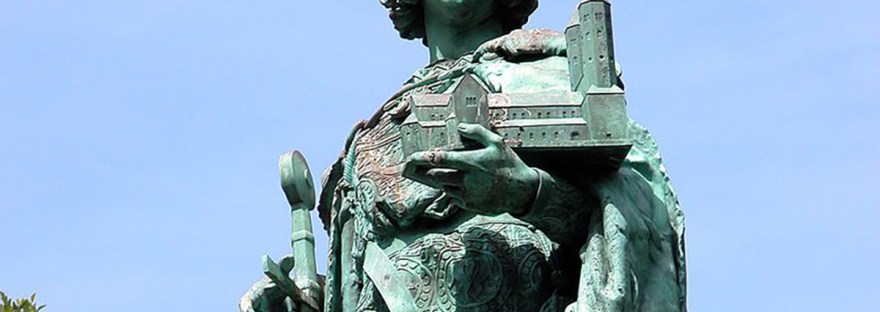
Heinrich der Löwe (Henry the Lion) Heinrich der Löwe (Henry the Lion) was one of the most powerful German princes of his time. He founded many cities, among them Munich, Lübeck and Augsburg*… but he lost it all when he angered Kaiser Friedrich I, Barbarossa (Frederick Barbarossa). The image below depicts the moment that Henry… Continue reading He founded Munich, Lübeck and Augsburg… but he lost it all when he angered Kaiser Friedrich I
The 1871 map of Germany shows Prussia at the height of its power
This map of Germany during the Second Reich, 1871 to 1918, shows Prussia at the height of its power. Prussian states are shown in green, all other German states are shown in yellow. It is interesting to see the map in this simple two color presentation because you don't lose the forest for the trees...Prussia… Continue reading The 1871 map of Germany shows Prussia at the height of its power
Prussian General Ludwig Yorck activated the sought after crusade of German Liberation from Napoleonic France.
Prussian troops supporting Napoleon’s Grande Armée in Russia in 1812 General Yorck and his Prussian troops had been compelled to augment Napoleon’s Grande Armée during the ill-fated invasion of Russia in 1812. This kind of cooperation was mandated by the Treaty of Tilsit, signed five years earlier after Napoleon defeated Prussia and all of Germany… Continue reading Prussian General Ludwig Yorck activated the sought after crusade of German Liberation from Napoleonic France.
German Eagles…single head 640 years, double-headed 366 years, then single head ever since 1871.
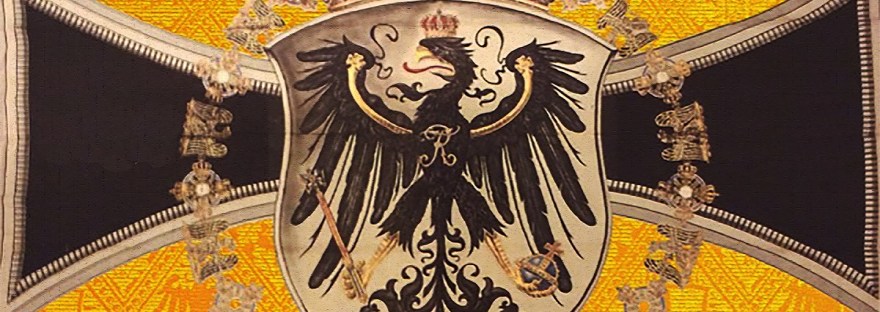
The single headed German eagle adopted in AD 800 was used for 640 years...this example is the Teutonic Knights Grandmaster symbol inaugurated in 1198...it consists of the German black crusader cross plus the German eagle that was gifted by the Kaiser. At the tips of the cross are 4 Fleur de Lis symbols gifted by… Continue reading German Eagles…single head 640 years, double-headed 366 years, then single head ever since 1871.
Should Austria or Prussia be the leader of Germany?
The question of who should lead a future united Germany, Prussia or Austria, was answered in 1866. In this first image, Prussian King Wilhelm is congratulating his son, Crown Prince Friedrich III, on the battlefield after their victory over the Austrian Empire. Prussia’s leadership was now assured but would mean the hoped for “Greater Germany”… Continue reading Should Austria or Prussia be the leader of Germany?
In 1806 Württemberg became a Kingdom
The Kingdom of Württemberg was a former state in southwestern Germany, including parts of the regions Swabia and Franconia. Its traditional capital was Stuttgart. 1806 Württemberg The kingdom had creative inventors, among them entrepreneurs whose companies are known worldwide: Gottlieb Daimler and Carl Benz founded the companies that would become Mercedes-Benz...they have always had plants… Continue reading In 1806 Württemberg became a Kingdom
Norddeutscher Lloyd of Bremen was the primary means of transporting German emigrants to America
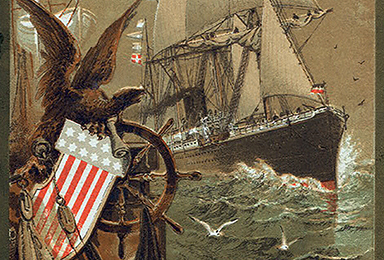
Before WWI they were on top of the world. The North German Lloyd company, NDL, was founded in Bremen in 1857 and developed into one of the two most important German shipping companies of the late 19th and early 20th centuries. Operating out of Bremen, it became the primary means of transporting German emigrants to America, and also was instrumental… Continue reading Norddeutscher Lloyd of Bremen was the primary means of transporting German emigrants to America