Whereas the US has Uncle Sam and England has John Bull, Germany has Michael, known as Der Deutsche Michel (The German Michael). “Der Deutsche Michel” ...statue on roof of the Academy of Art in Königsberg, East Prussia His popularity peaked in the 1840s, so perhaps this is why most people never heard of Michel. Even… Continue reading Whereas the US has Uncle Sam and England has John Bull, Germany has Michael, known as Der Deutsche Michel
Tag: german history
The Tannenberg Victory made Hindenburg a national hero
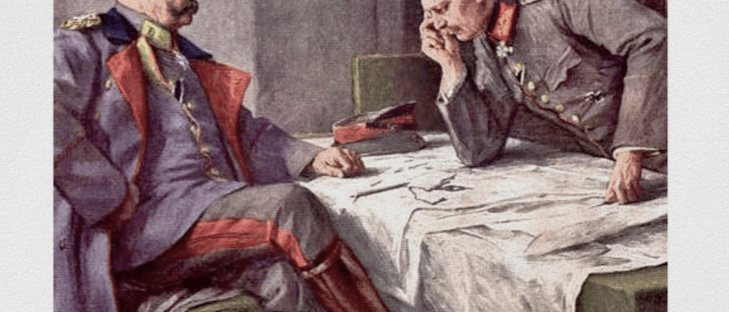
The Heroes of Tannenberg, Hindenburg and Ludendorff, saved East Prussia in August 1914 with a decisive victory against overwhelming odds. Paul von Hindenburg, 66, a retired Prussian General , was called into service to take over command of the relatively small force, one army, that was having trouble holding back the Russian invasion of East… Continue reading The Tannenberg Victory made Hindenburg a national hero
German history has a long running connection with Italy
Kaiser Friedrich II at his court in Palermo, Italy Another interesting aspect of German history is the long running connection with Italy. For example, there is a statue of German Kaiser Friedrich II …who lived in the 13th century…still being honored today in Naples, Italy. The image here, painted by Arthur von Ramberg, portrays this… Continue reading German history has a long running connection with Italy
The Little Ice Age started in early 1300’s and Europe bore the brunt of its ill effects for 500 years
Between the early 14th and late 19th centuries, a period of cooling known as the Little Ice Age chilled the planet. It was a period of cooling that occurred after the Medieval Warm Period. It has been conventionally defined as a period extending from about 1300 to about 1850 Europe bore the brunt of its ill effects for… Continue reading The Little Ice Age started in early 1300’s and Europe bore the brunt of its ill effects for 500 years
Although at war with Austria, Russia, France, and Sweden, Frederick did not ever expect to lose a battle.
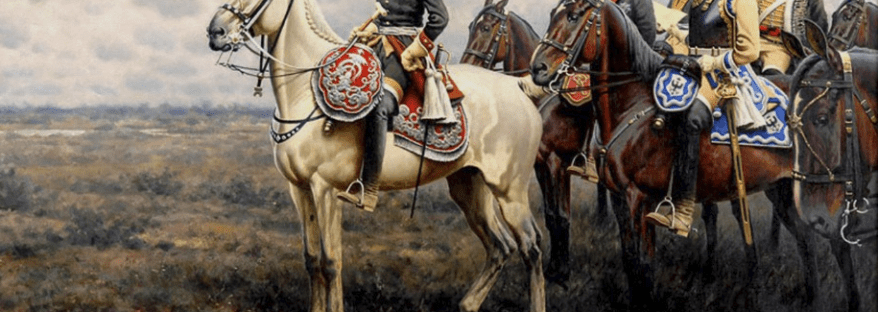
It was in the frenzied fighting in 1757 at the Battle of Kolin that Frederick the Great is said to have bawled at Manstein’s flinching Prussian infantry “Dogs! Do you want to live forever?” The surrounded Prussians in a rearguard battle are depicted in this painting by Richard Knötel. Prussia lost this battle, but losing… Continue reading Although at war with Austria, Russia, France, and Sweden, Frederick did not ever expect to lose a battle.
Elisabeth Princess of Bavaria, known as Sissi, became the popular Empress of Austria in 1854
Equestrian portrait of Elisabeth, age 15, at her father's castle in Bavaria....Verlobungsgeschenk, her wedding engagement gift to Franz Joseph I of Austria...1853 painting by Karl Theodor von Piloty Elisabeth of Bavaria, Empress of Austria (1865), portrait by Franz Winterhalter Elisabeth Princess of Bavaria was popularly known as Sissi, which was also the title of a 1957… Continue reading Elisabeth Princess of Bavaria, known as Sissi, became the popular Empress of Austria in 1854
When the French declared war on Prussia in 1870, they were overconfident.
This painting by Anton von Werner shows German Crown Prince Friedrich Wilhelm contemplating the corpse of French General Abel Douay, on the first day of the Franco-Prussian War in August 1870. When the French declared war on Prussia in 1870, they were overconfident. They assumed an easy victory and seriously underestimated the strength and experience… Continue reading When the French declared war on Prussia in 1870, they were overconfident.
Twenty year old Frederick William Hohenzollern became a Prince of the Holy Roman Empire in 1640
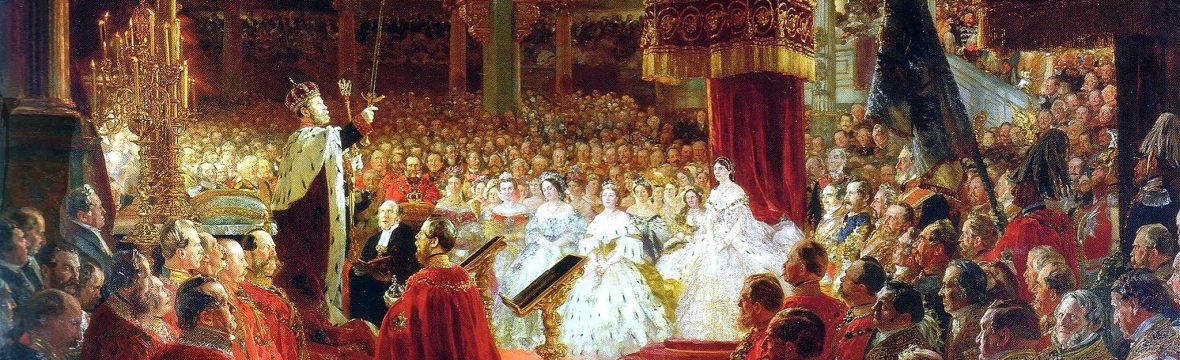
Twenty year old Frederick William Hohenzollern became Elector of Brandenburg and Duke of Prussia in 1640 and reigned for 48 years until his death in 1688. Historians refer to him as "the Great Elector" (der Große Kurfürst) because of his military and political prowess which set the groundwork for Brandenburg and Prussia to merge and… Continue reading Twenty year old Frederick William Hohenzollern became a Prince of the Holy Roman Empire in 1640
For everyone with German heritage, the Kaiserzeit of 1871 to 1918 is a another good reason to be proud.
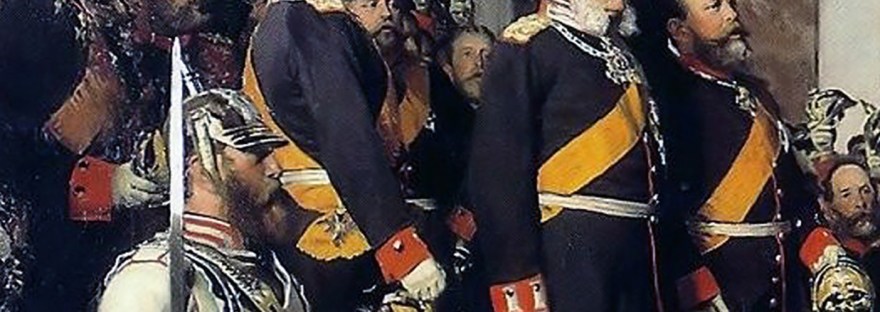
Germany launched an era of prosperity in 1871 when almost all German states merged into one new nation. The synergy that was unleashed... plus 47 years of peace in Europe...lead to a German Empire that was an industrial, technological, and scientific giant. For example, Germany received more Nobel Prizes in science than any other country… Continue reading For everyone with German heritage, the Kaiserzeit of 1871 to 1918 is a another good reason to be proud.