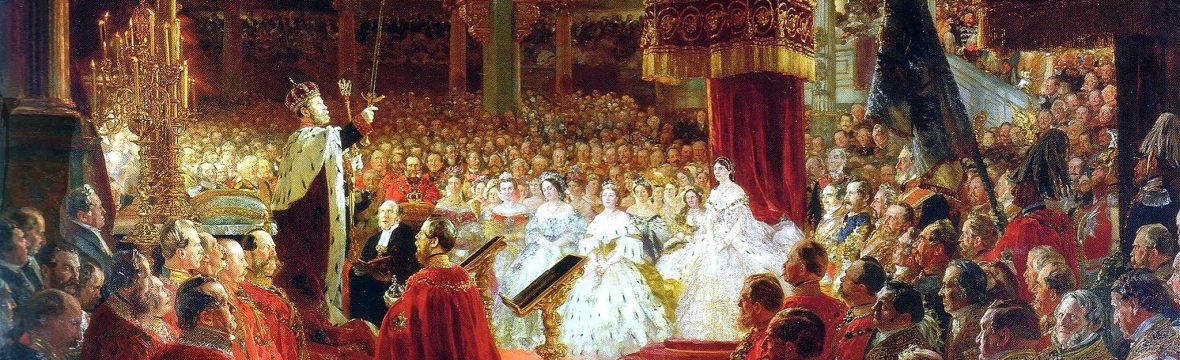

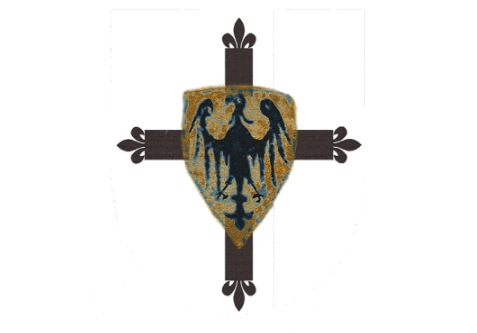
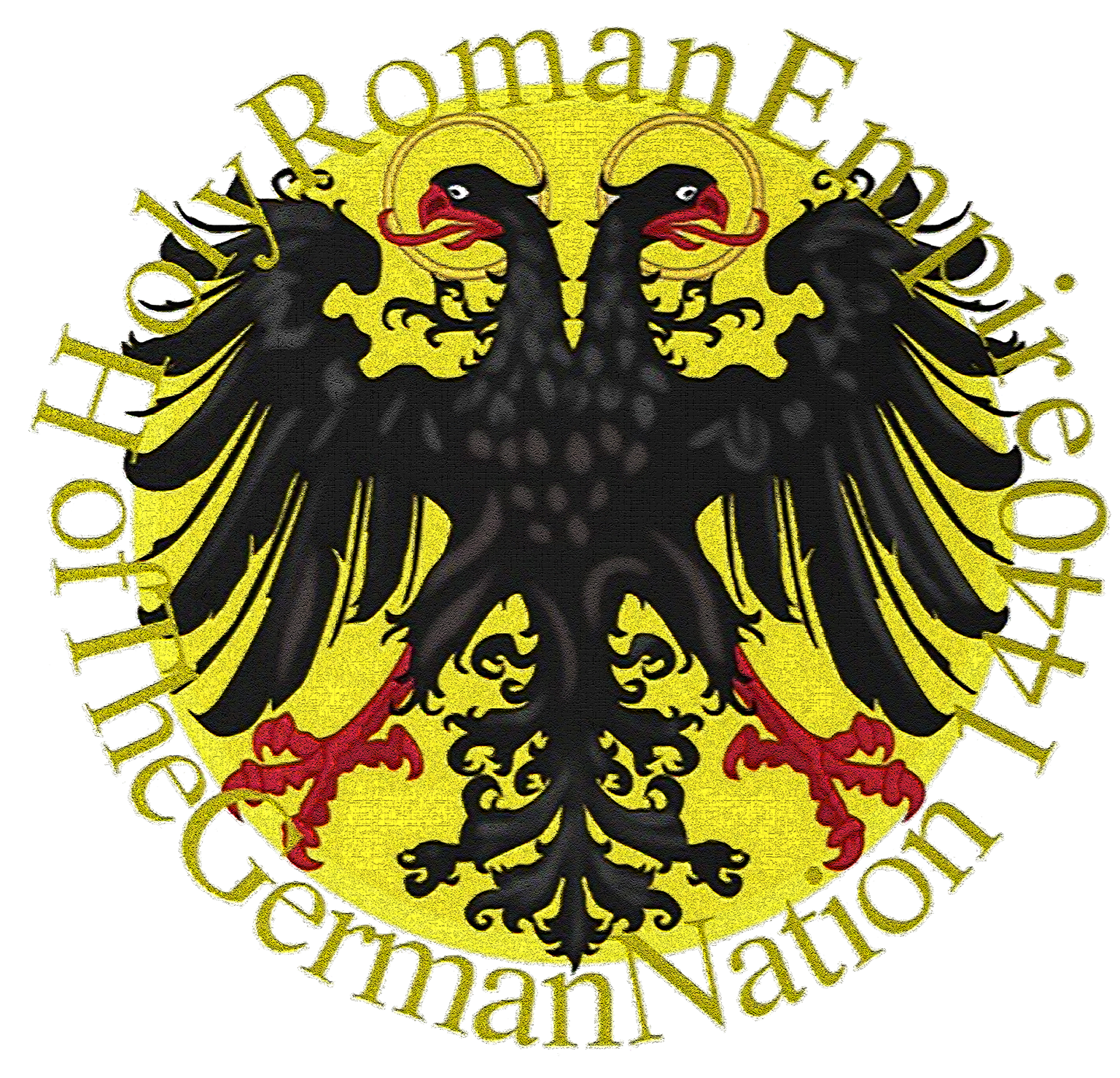
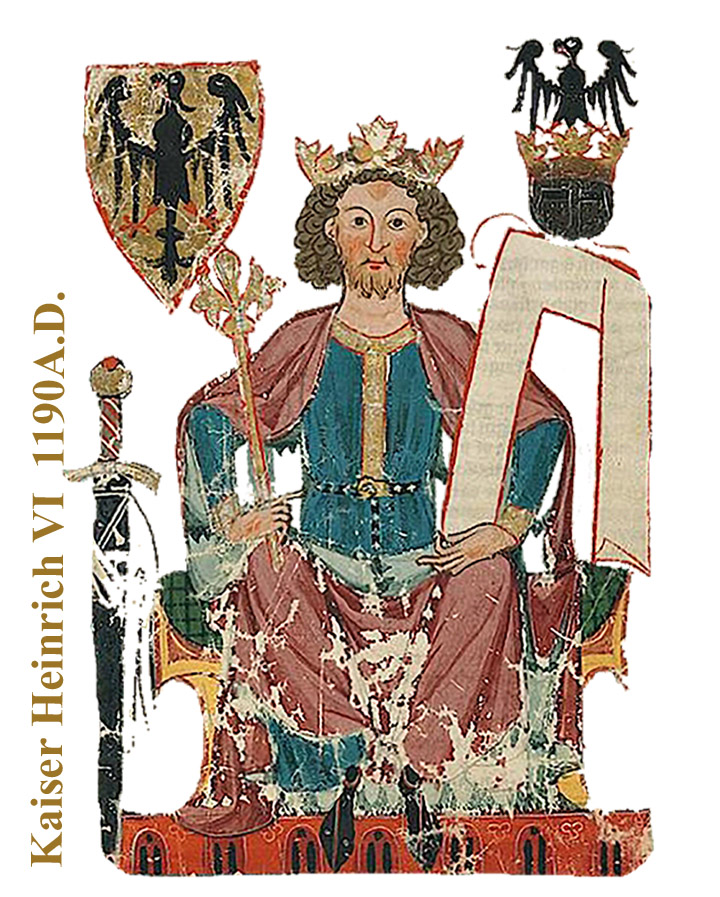
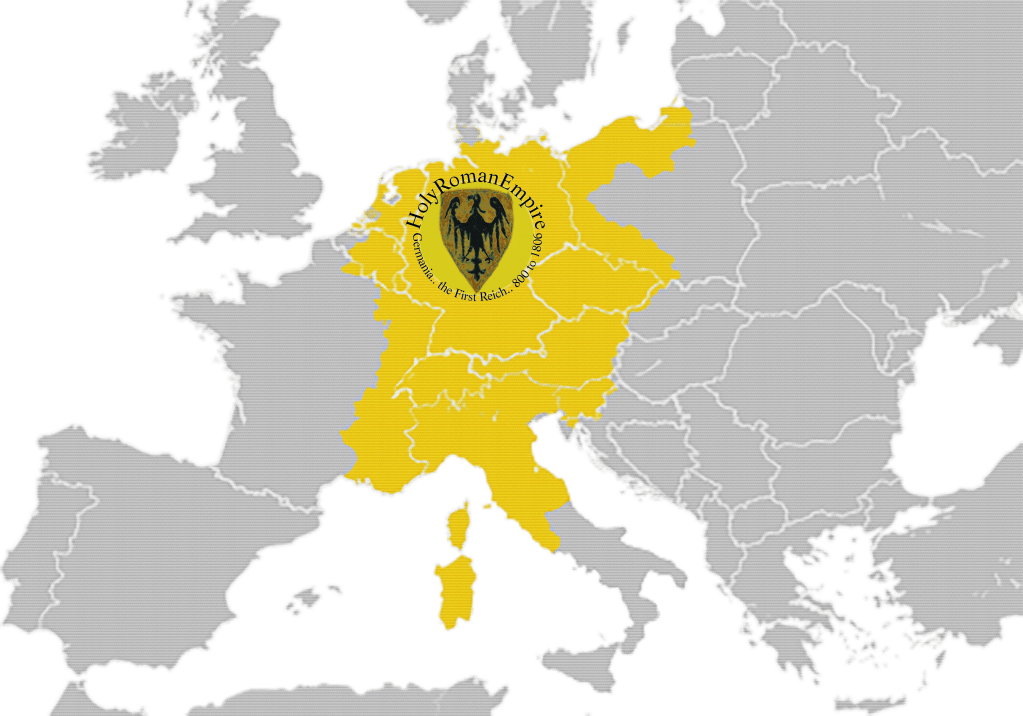
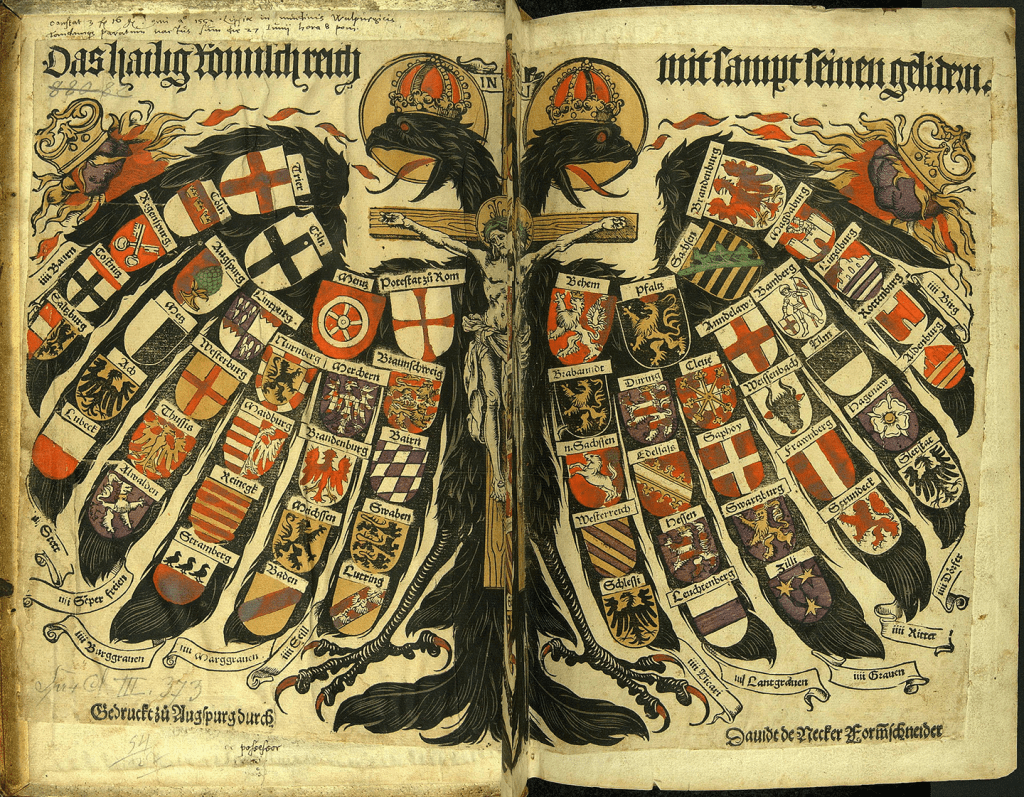
The double-headed eagle symbol of the Holy Roman Empire started in 1440, while the name change “of the German Nation” was added in 1512. The double headed eagle was introduced in 1440 to emphasize the religious and secular nature of the empire. It replaced the single headed eagle that was used 640 years by the Empire since 800 A.D. The double headed eagle was then used for the next 366 years until the Holy Roman Empire was defeated and dissolved by French Emperor Napoleon in 1806.
After the Freedom Wars of 1813 to 1815 led to Napoleon’s defeat, the numerous independent German states began a struggle to re-unite themselves, setting off a power struggle between Austria and southern states versus Prussia and northern states. A war was fought in 1864, briefly uniting Austria and Prussia against their common foe Denmark. But then in 1866, Austria and Prussia fought their inevitable battle for dominance over a future German Empire. Prussia won and became the undisputed leader of Germans.
Prussia’s Chancellor Bismarck worked for years to achieve either a “greater German Empire” to include Austria, or if not, then for a “lesser German Empire” of every state except Austria. In the end Austria and its non-German states (mainly Hungary) decided to remain independent. The southern state of Bavaria was hesitant but on the brink of joining the north.
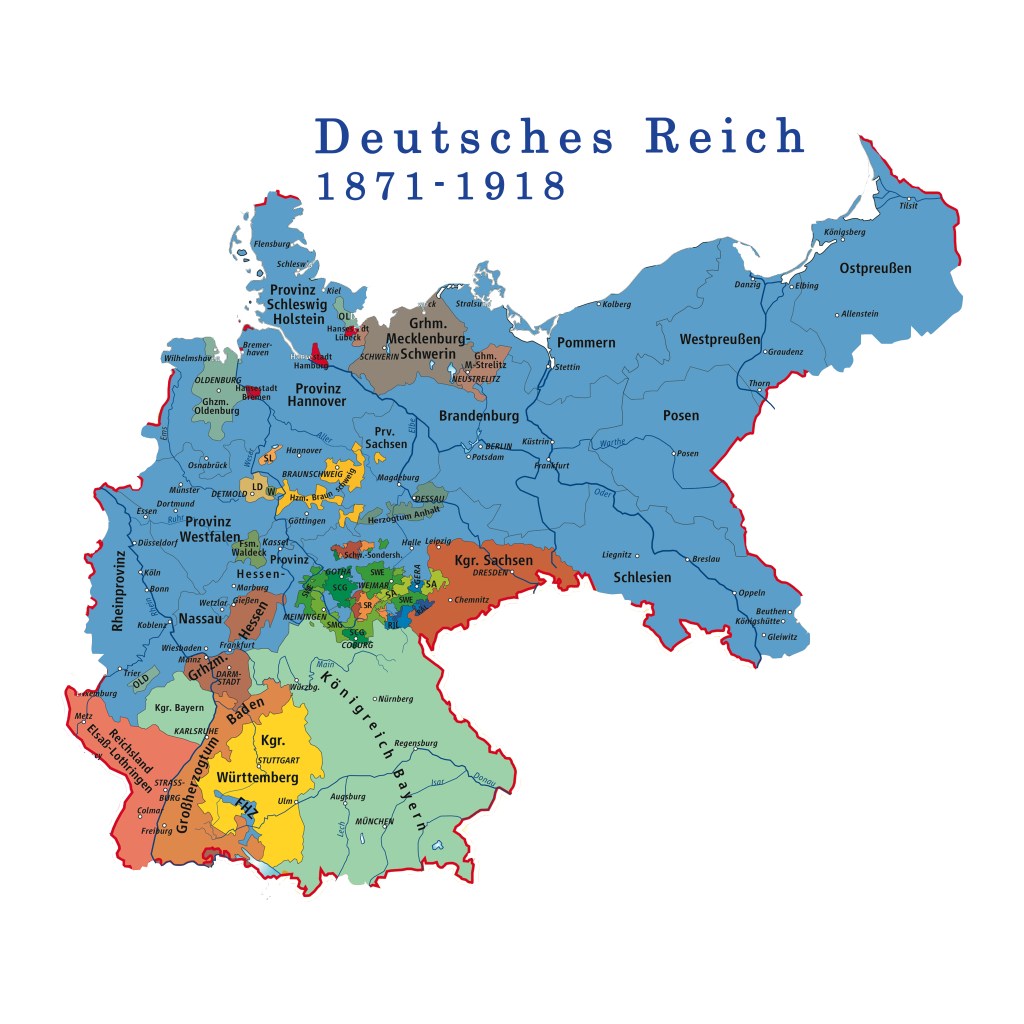
In 1870, when the French again invaded Germany, the Kingdom of Prussia turned the tables on them and defeated France and captured their Emperor Napoleon III. For Prussia this war was the final push needed for unification. Prussian King Wilhelm then dramatized his victory by using the Versailles Palace in France to announce the birth of a new German Empire, the Second Reich, in 1871.
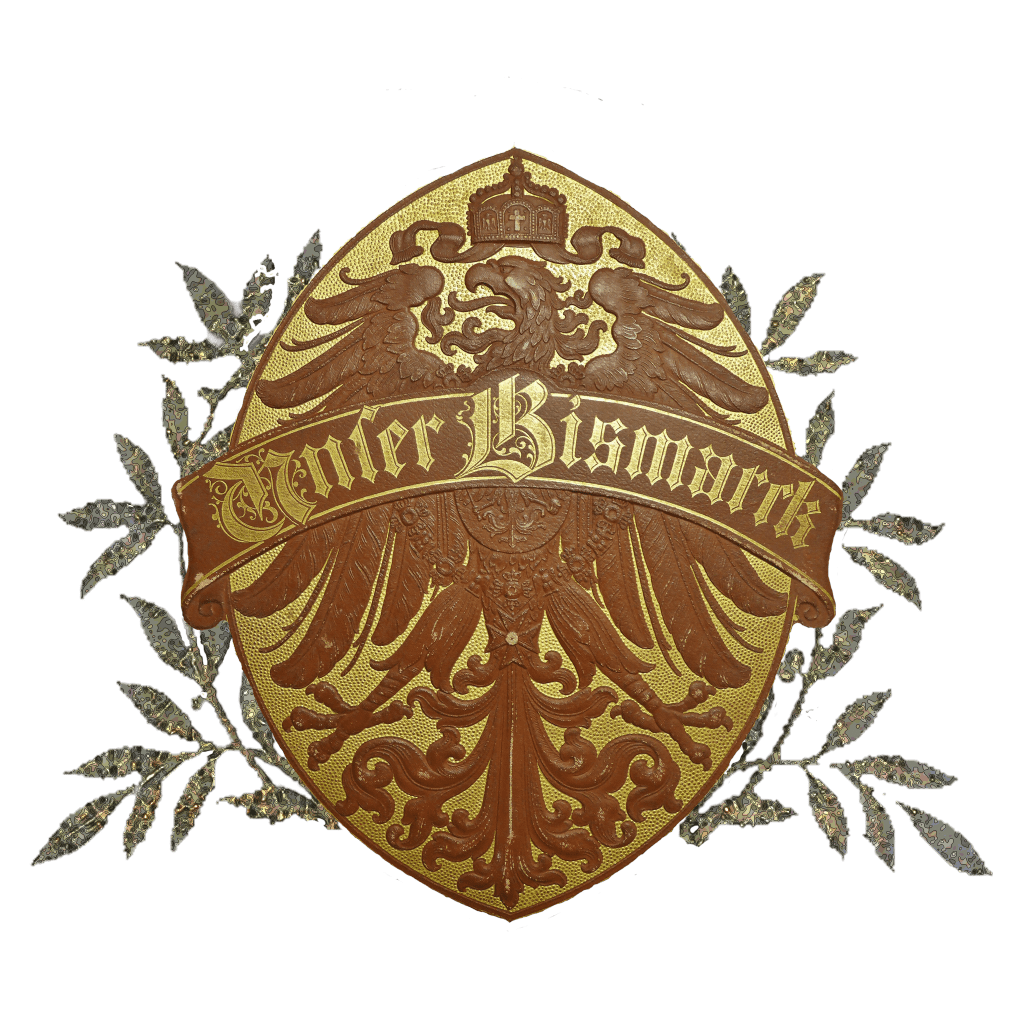
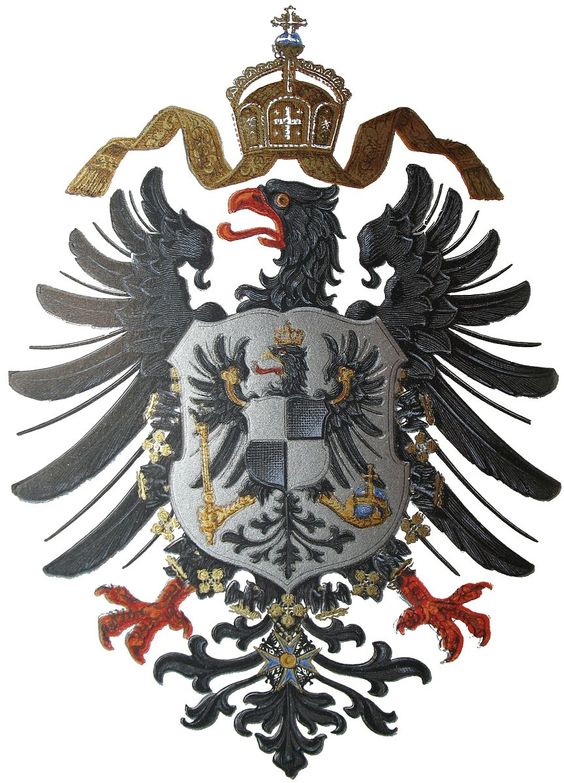
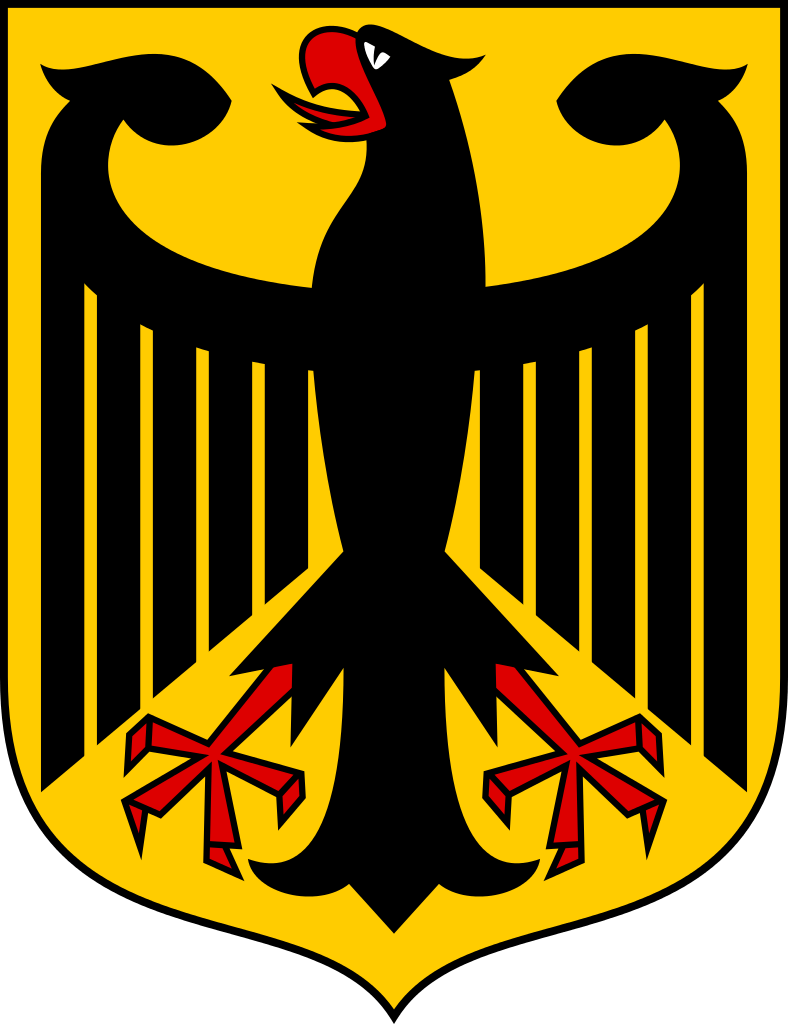
The new Reich adopted the original Empire’s old single headed eagle of 800 A.D. as its symbol, albeit a more modernized 19th century design, similar to the Prussian Eagle. Ever since then the single headed eagle, in various renditions, has remained the symbol of Germany.

Federal Republic of Germany 1949

Explore images on brand new products at my stores

 For People Proud of their German Heritage
Love the site!
LikeLiked by 1 person
which eagle was used on helmets in 1871?
LikeLike
This image on a mug of a Prussian model 1890 Prussian Infantry Officer Pickelhaube is representative of the era 1870 to 1914…https://vintagegermanygifts.etsy.com/listing/1595263913/pickelhaube-and-iron-cross-191411oz
LikeLike
Thanks
I have this metal helmet eagle of my great, grandfather…..helmet was played with and destroyed.
He was evidently in the infantry as a twenty year old in the Franco-Prussian war. Then he left Germany and ended up in Texas. Have often wondered, Why Texas?
Carter
LikeLike
A lot of Germans were drawn to Texas hill country because it reminded them of home. Others were drawn by advertising and other Germans who painted a glowing image of the American West with plentiful cheap land and opportunity.
LikeLike