
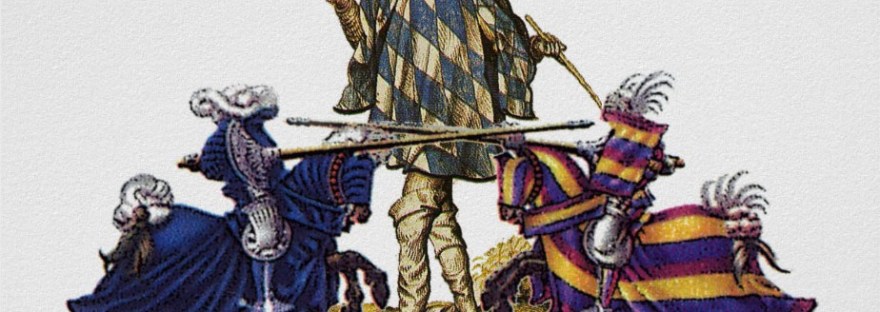
Jörg Rugen, master of ceremonies at Jousting Tournaments The wand held by Jörg Rugen was an important tool, used by Heralds to gain attention and make grand gestures. His tabard with the white-and-blue lozenges design, was originally the coat of arms of the Counts of Bogen, adopted in 1247 by the House of Wittelsbach, rulers of… Continue reading Heralds were the MC’s at Tournaments and experts in military matters, diplomacy, coats of arms and genealogy
Author: edsimoneit
From Germany to living with Mohawk Indians in 1712
This image of Conrad Weiser is from a vintage cigar box and portrays Weiser along with his home in Reading, an old Pennsylvania crest, a scene with Indians and the coat of arms of the Duchy of Württemberg in Germany where he was born and raised. Conrad Weiser image from a vintage cigar box From… Continue reading From Germany to living with Mohawk Indians in 1712
Frederick Muhlenberg, First Speaker of the House, came from a remarkable family of German-Americans
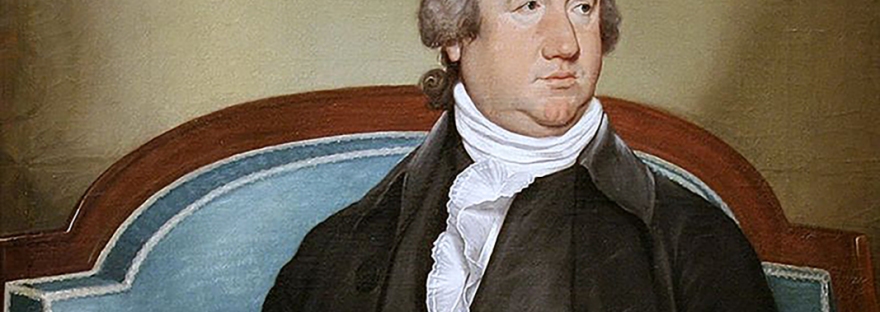
The first Speaker of the U.S. House of Representatives in 1789 was a German-American, Frederick Muhlenberg. In Joseph Wright’s 1790 portrait of Frederick Muhlenberg, the Speaker's likeness bears out contemporary descriptions of Muhlenberg’s rosy complexion and ample dimensions. Frederick Muhlenberg , a German-American, in 1790 Although born in Pennsylvania, his immigrant father made sure that… Continue reading Frederick Muhlenberg, First Speaker of the House, came from a remarkable family of German-Americans
Berlin was once located in the center of Germany…now the German capital is oddly situated right next to the eastern border.
Berlin in 1939 Current map of Germany with Berlin at eastern border On a map of the German Empire in 1871, you can see that Berlin was once located in the center of Germany. The location of Berlin within German borders is the most glaring difference between old and modern Germany. When you look at… Continue reading Berlin was once located in the center of Germany…now the German capital is oddly situated right next to the eastern border.
This incredibly ornate statuette is an example of German Goldsmith Art, circa 1586
This incredibly ornate Bavarian-made Statuette of St George was commissioned in 1586 and completed 11 years later in 1597. The materials used to create the 20 inch tall statuette Include gold, enamel, silver-gilt, diamonds, rubies, emeralds, opals, agate, chalcedony, rock crystal and other precious stones and pearls The statuette was made to house a relic… Continue reading This incredibly ornate statuette is an example of German Goldsmith Art, circa 1586
German Romantic Era of the early 19th century, as presented by Caspar Friedrich
Caspar Friedrich is considered the most important German artist of his generation, best known for allegorical landscapes which typically feature contemplative figures silhouetted against night skies, morning mists, barren trees or Gothic ruins. His primary interest as an artist was the contemplation of nature and often set a human presence in diminished perspective amid expansive… Continue reading German Romantic Era of the early 19th century, as presented by Caspar Friedrich
Albert Bierstadt and other talented German artists sought to capture the romance of the west
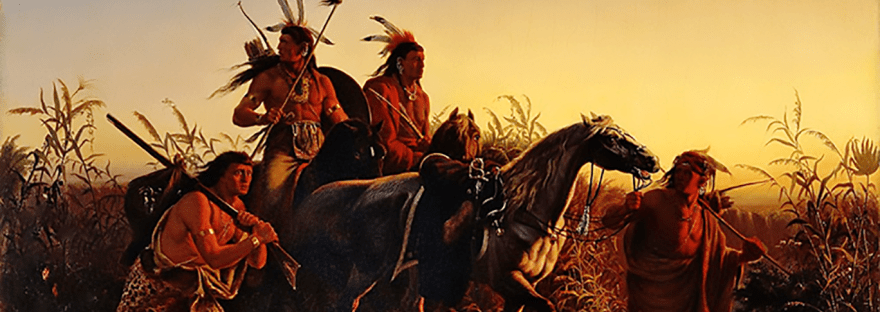
This night time scene was painted in 1869 by Albert Bierstadt, a German artist who was drawn to the American frontier as were many other Germans in the 19th century. The painting shows a group of Oregon bound pioneers and captures the romance of the American West. Its a glimpse of the pioneers at a… Continue reading Albert Bierstadt and other talented German artists sought to capture the romance of the west
The German Empire had 4 armies: those of Prussia, Bavaria, Württemberg, and Saxony…and each had their own uniforms, insignias and mottos.
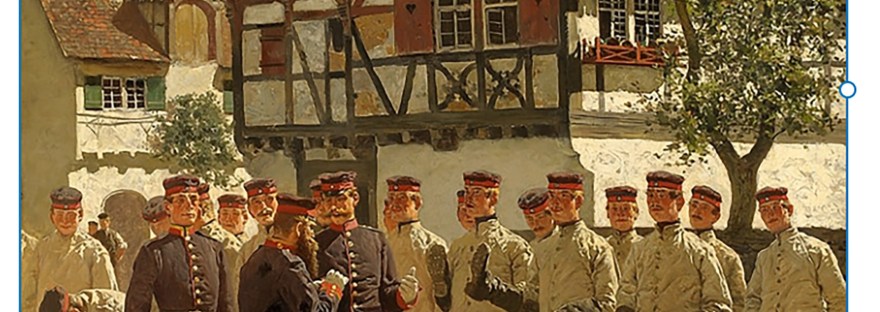
"Stiefelappell" (Boot Inspection Rollcall).. by Carl Röchling . A nostalgic image that encapsulates the calm peace time era that was brought about by Bismarck after 1871. The painter Carl Röchling accomplished this by depicting a beautiful sunny day in 1890, showing us the quaint old German half timber barracks used by the soldiers and casually… Continue reading The German Empire had 4 armies: those of Prussia, Bavaria, Württemberg, and Saxony…and each had their own uniforms, insignias and mottos.
The first practical refrigerator was invented in Germany in 1873
We don’t give Refrigeration too much thought and take it for granted, but as recently as 100 years ago people were using chunks of ice in boxes to inhibit the destructive action of bacteria, yeast, and mold. In fact consumers that used the icebox in 1910 faced the same challenge of a moldy and stinky… Continue reading The first practical refrigerator was invented in Germany in 1873
Frederick the Great Quotes
After the end of the Seven Year War in 1763, Prussia was a great power whose importance could no longer be challenged. Frederick the Great’s personal reputation was enormously enhanced. A number of nations sent officers to Prussia to learn the secrets of Prussia’s military power. Prussia became one of the most imitated powers in Europe.… Continue reading Frederick the Great Quotes